Choosing between disposable and refillable devices requires more than comparing prices or flavors. The real question is “disposable vape vs refillable vape which is better” for a legally eligible adult who already uses nicotine. Safety, waste, maintenance, and product transparency all matter. Neither option is risk-free, and non-users should not begin vaping.
Recent data shows why this comparison deserves careful attention. The U.S. Centers for Disease Control and Prevention reported that about 1.63 million American middle and high school students used e-cigarettes in 2024. Among current youth users, disposable products remained the most common device type. Action on Smoking and Health’s 2024 adult survey also identified millions of vapers in Great Britain, while noting changing preferences between disposable and reusable products. These reports describe behavior, not product approval. They should not be treated as proof that vaping is harmless.
Dr. Linda Bauld, Professor of Public Health at the University of Edinburgh, has stated, “Vaping is not harmless, but it is significantly less harmful than smoking.” Her caution is important. Refillable devices may reduce packaging waste and offer more control over liquid choice, but they require cleaning, charging, and correct handling. Disposables feel simple, yet their short lifespan creates a growing waste problem. The answer is not perfectly tidy. A poorly maintained refillable device can perform badly, while a compliant disposable may seem more convenient. This guide compares both options using current evidence, responsible-use principles, and practical details, including cost per week, battery reliability, flavor consistency, and end-of-life disposal. Product rules also differ by country, so readers should check local requirements before purchasing.
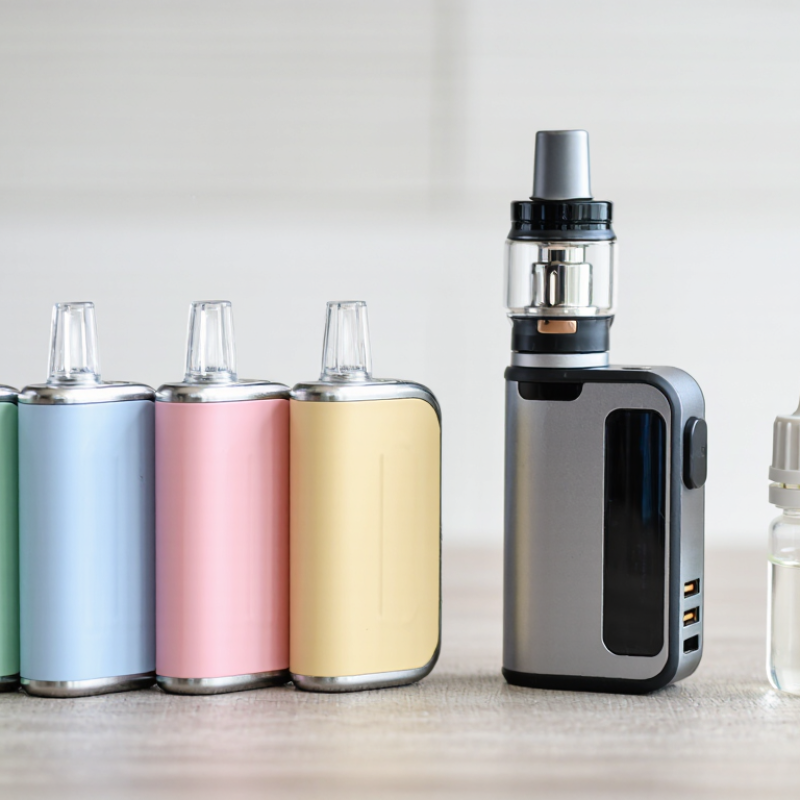
A disposable vape is a sealed, ready-to-use device. It contains e-liquid, a battery, and a preinstalled coil. When the liquid or battery runs out, the entire unit is discarded. A refillable vape uses a rechargeable battery and a tank or pod. Users add e-liquid and replace coils or pods when needed. The main difference is simple: convenience versus ongoing maintenance.
The 2024 National Youth Tobacco Survey, published by the CDC and FDA, reported 1.63 million current student e-cigarette users in the United States. Among them, 55.6% mainly used disposable devices. This figure shows strong product availability, but it does not prove that disposables are better for adults. In practical use, disposables usually offer fewer setup decisions. Refillable devices can reduce repeated packaging waste, yet they require charging, cleaning, and careful filling. The comparison is not perfectly clean. Costs also depend on usage frequency, liquid consumption, and coil replacement.
Tips: Check the battery condition before use. Keep refillable liquid away from children and pets. Use only compatible components, and stop using any device that becomes unusually hot or leaks. For a more reliable comparison, record weekly spending and waste for one month. Personal habits often change the result. Industry figures describe broad behavior, not your exact experience.
| Comparison Dimension | Disposable Vape | Refillable Vape |
|---|---|---|
| Basic Definition | A pre-filled, ready-to-use vaping device designed to be discarded when its e-liquid or battery is depleted. | A reusable device with a rechargeable battery and a tank or pod that can be refilled with e-liquid. |
| Initial Cost | Usually lower because the device, battery, coil, and e-liquid are supplied as one integrated product. | Usually higher because the first purchase may include a battery device, pod or tank, charger, and e-liquid. |
| Long-Term Cost | Can become more expensive over time because a complete new device is purchased after use. | Can be more economical over repeated use because only e-liquid and replaceable pods or coils generally need to be purchased. |
| Ease of Use | Very simple: generally inhale to activate, with no filling, coil replacement, or liquid measurement. | Requires filling, charging, and periodic pod or coil replacement, depending on the design. |
| Battery | The battery is normally built in and is discarded when the device can no longer provide power. Some models include a charging port, but the device remains non-refillable. | The battery is rechargeable. Battery life depends on capacity, power setting, usage frequency, and battery age. |
| E-Liquid Capacity | The e-liquid amount is fixed by the manufacturer and cannot normally be replenished after depletion. | The user can refill the tank or pod, subject to its capacity and local legal limits. |
| Nicotine Choice | Nicotine strength and formulation are predetermined. Availability depends on local regulations and the product category. | Offers more choice of nicotine strength and e-liquid formulation, provided the selected products are legally sold in the user’s location. |
| Flavor Flexibility | Flavor selection is limited to the flavor supplied in each device; changing flavor normally requires using a different device. | Flavor can usually be changed by replacing the e-liquid, although residual flavor may remain in the pod or coil. |
| Maintenance | Minimal maintenance is required, but the device cannot normally be repaired or have its internal parts replaced. | Requires regular cleaning and may require replacement of pods, coils, seals, or other consumable parts. |
| Portability | Compact and convenient for short-term use because there is no separate e-liquid bottle or charging routine for basic models. | Portable, but users may need to carry a charging cable, spare pod, or e-liquid bottle. |
| Performance Consistency | Generally consistent during the usable life of the device, although vapor production and flavor may decline as the battery or liquid runs low. | Performance can be adjusted on some devices, but it depends on coil condition, battery charge, e-liquid level, and correct maintenance. |
| Customization | Limited customization because airflow, power output, coil type, and e-liquid are usually fixed. | Greater customization may be available through adjustable airflow, power settings, pod or tank types, and e-liquid choices. |
| Waste Generation | Creates electronic waste, battery waste, plastic components, and residual e-liquid each time the complete device is discarded. | Usually produces less waste per period of use because the main device is reused, although pods, coils, bottles, and batteries still require responsible disposal. |
| Recycling Considerations | Should not be placed in ordinary household rubbish where battery recycling is available. Follow local rules for lithium battery and electronic waste collection. | Used batteries, coils, pods, and electronic components should be handled through appropriate battery or electronic-waste collection systems. |
| Leak Risk | Usually limited by the sealed construction, but leakage can still occur if the device is damaged, overheated, or stored improperly. | Leakage is more dependent on filling technique, seals, pod condition, e-liquid viscosity, and storage position. |
| Learning Curve | Low learning curve and suitable for users who prioritize simplicity. | Higher learning curve because users must understand charging, filling, coil or pod replacement, and basic device care. |
| Best Suited To | Adults who prioritize convenience, portability, and minimal setup, subject to applicable age and tobacco regulations. | Adults who prioritize ongoing use, lower long-term operating costs, flavor flexibility, and device customization, subject to applicable regulations. |
| Main Advantages | Convenient, simple to operate, portable, and requires little maintenance. | Reusable, more customizable, supports a wider range of e-liquids, and may reduce long-term costs and waste. |
| Main Drawbacks | Limited customization, recurring complete-device purchases, and greater electronic-waste concerns. | More maintenance, higher initial setup cost, possible leakage, and the need to manage charging and replacement parts. |
| Overall Choice | Better for convenience and short-term simplicity. | Better for regular users who value flexibility, reusability, and potentially lower ongoing costs. |
A disposable device usually costs less at checkout. A refillable device often needs a larger initial payment. Small details matter. E-liquid, coils, and charging can change the final cost.
A refillable device may reduce long-term spending for regular adult users. However, maintenance and replacement parts add costs. My early estimate was wrong. Track weekly spending for four weeks before deciding.
A disposable device provides predictable use until its battery or liquid runs out. A refillable device needs regular charging. Its battery may support longer daily use. Usage habits matter.
Refillable devices usually provide more choices. Adults may select different strengths, flavours, and bottle sizes where legally permitted. Disposable options are often more limited. Check local rules carefully.
A disposable device offers quick setup and easy portability. It may suit an adult during a busy workday or short trip. There is usually no bottle or charging cable to carry. Convenience has a cost.
A refillable device allows adjustments to strength, flavour, and airflow. It requires cleaning, coil replacement, and leak inspections. A stained pocket is possible. Some users appreciate control, while others dislike the routine.
Record purchases and usage for four weeks. Include e-liquid, coils, charging equipment, and replacement devices. Compare weekly totals, not shelf prices alone. Track it.
Keep devices away from heat and moisture. Use only recommended charging equipment. Keep liquids away from children and pets. Inspect for leaks before use. Do not mix unfamiliar liquids. Never open or modify disposable devices.
No option is risk-free. Nicotine can cause dependence. People who do not use nicotine should not begin. A one-week usage record may reveal growing dependence. That deserves reflection.
In 2026, the question “disposable vape vs refillable vape which is better” depends on personal priorities, usage habits, and local regulations. Disposable vapes are pre-filled, ready to use, and require little maintenance, making them convenient for occasional users or people who value simplicity. Refillable vapes use a rechargeable battery and refillable e-liquid tank, offering more control over flavor, vapor settings, and nicotine strength where legally permitted.
The two options also differ in long-term cost, battery life, waste, and upkeep. Disposable devices may have a lower initial price but can create more waste and become less economical with frequent use. Refillable devices usually require a larger upfront investment, regular charging, cleaning, coil replacement, and careful e-liquid handling, but they may provide greater flexibility and reduce device waste over time. The best choice should consider convenience, budget, environmental preferences, maintenance tolerance, age requirements, and applicable laws.

 Velour Vape