Top 5 Reasons Disposable Vape Is Safer Than Cigarettes?

Time:2026-05-19 Author:Sophia
0%

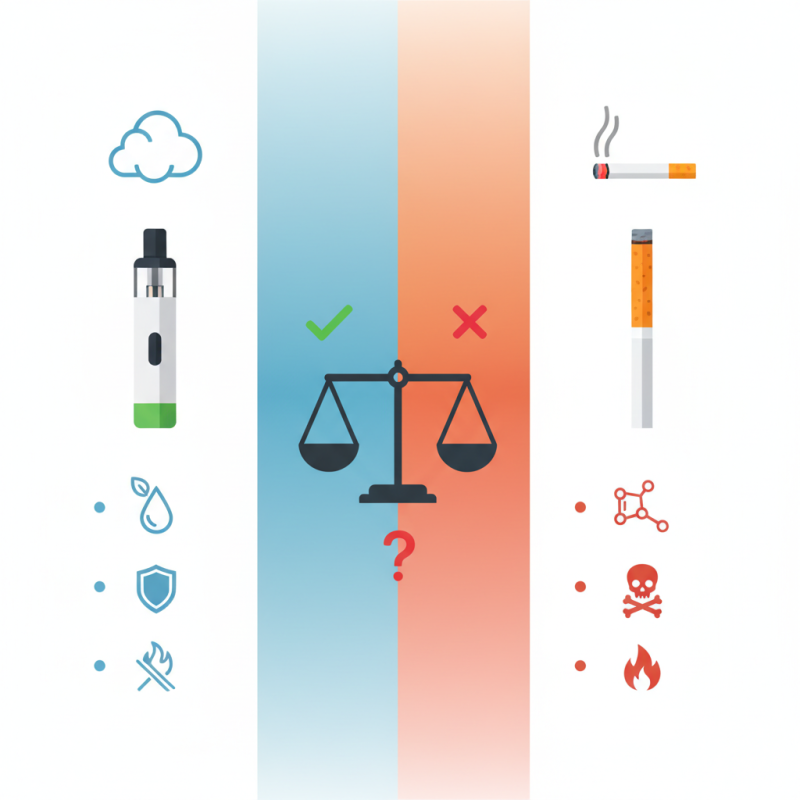
The debate over vaping and smoking continues to grow. Many ask, "is disposable vape safer than cigarettes?" This question highlights the need for informed discussion. Disposable vapes offer a different experience, often perceived as less harmful than traditional cigarettes.

Studies suggest that vaping eliminates many harmful substances found in cigarettes. While both methods can have health risks, disposable vapes mainly contain fewer toxins. For example, they lack many of the harmful tar compounds produced by burning tobacco. This reduction in harmful ingredients is a significant reason users consider switching.

However, it is important to acknowledge that vaping is not without its flaws. Some studies indicate potential respiratory issues linked to vaping. Users should remain cautious and informed about their choices. Discerning between the two methods can lead to better health outcomes. Understanding these nuances is crucial in the ongoing conversation around smoking and vaping.
Top 5 Reasons Disposable Vape Is Safer Than Cigarettes?

Understanding the Composition of Disposable Vapes vs. Cigarettes

Disposable vapes and traditional cigarettes differ significantly in their composition. Vapes primarily contain nicotine, flavorings, and a base of propylene glycol and vegetable glycerin. These ingredients create a vapor rather than smoke. Cigarettes, however, contain a complex mix of tar, carbon monoxide, and thousands of harmful chemicals. The combustion process in cigarettes releases toxins that are known to damage lungs and heart health.

The presence of these harmful substances in cigarettes is alarming. In contrast, the vapor from disposable vapes usually has fewer harmful byproducts. Users have reported feeling less irritation in their throats and lungs with vapes. While nicotine addiction remains a concern, the absence of tar and many carcinogens makes vapes a seemingly safer alternative. However, it’s essential to understand that vaping is not without risks.

Many users find themselves reflecting on their habits. Some might start with vapes as a way to reduce harm but can end up dependent on nicotine. The long-term effects of vaping are still not fully understood. As the market evolves, ongoing research will shed light on these nuances. Balancing harm reduction with potential risks remains a critical conversation in the public health sphere.

Health Risks: Comparing Tar Levels in Disposable Vapes and Cigarettes

When examining health risks, the differences in tar levels between disposable vapes and cigarettes become crucial. Cigarettes generate a significant amount of tar when burned. This tar contains harmful substances that can accumulate in lungs over time. In contrast, disposable vapes produce vapor instead of smoke. This vapor contains fewer harmful compounds and reduced levels of tar. Although not entirely risk-free, disposable vapes offer a less harmful alternative.

Studies indicate that the tar content in traditional cigarettes can lead to severe health problems. These include chronic obstructive pulmonary disease and lung cancer. Disposable vapes typically have a minimal tar output. This reduction in tar can lead to fewer health risks. However, it's essential to recognize that vaping is not completely safe. Users should be aware of this nuance in health discussions.

Moreover, the long-term effects of vaping are still under research. Some predict that these devices might lead to other types of health issues. Reports on flavoring agents and other additives in e-liquids raise additional concerns. Regaining health requires cautious consideration of vaping as a safer alternative. Engaging in informed decisions is key for individuals seeking to reduce health risks.

Nicotine Delivery: How Disposable Vapes Offer Controlled Dosing

Disposable vapes have gained popularity, especially for their controlled nicotine delivery. Unlike traditional cigarettes, which often deliver a high and unpredictable dose of nicotine, disposable vapes allow users to customize their intake. This feature can reduce the risk of nicotine addiction and dependency.

A report from the National Institute on Drug Abuse indicates that tailored dosing can lead to lower health risks. Controlled dosing means that users can manage their nicotine consumption better. For instance, a user can select a vape that delivers a specific concentration of nicotine that meets their needs without excessive intake. This functionality adds a layer of safety for those trying to reduce or quit smoking.

Moreover, experts acknowledge that the lack of harmful tar and chemicals in disposable vapes makes them a less hazardous alternative. However, some users report a false sense of security, believing these products are completely safe. This perception may lead to overuse, raising concerns about long-term effects. It's essential to approach vaping with caution, even as it offers distinct advantages over traditional cigarettes.

Top 5 Reasons Disposable Vape Is Safer Than Cigarettes

Reason Disposable Vape Traditional Cigarettes
Controlled Dosing Allows users to choose specific nicotine levels Nicotine content is fixed and varies by brand
Fewer Chemicals Contains fewer harmful chemicals than combustible tobacco Contains thousands of harmful substances
No Smoke Inhalation Vapor is produced rather than smoke, reducing respiratory risks Smoke inhalation is a major health risk
Odorless Vapor Vapor dissipates quickly, leaving little odor Leaves a strong and lingering smell
Less Secondhand Exposure Minimizes risks associated with secondhand smoke Significant risk for bystanders

Secondhand Smoke vs. Vapor: The Safer Alternative in Public Spaces

In public spaces, the difference between secondhand smoke and vapor becomes significant. Traditional cigarettes release toxic fumes, which pose serious health risks. According to the American Lung Association, secondhand smoke contains over 7,000 chemicals, many of which are harmful. This makes public areas hazardous for non-smokers, especially children and pregnant women.

In contrast, vapor from disposable vapes generally releases fewer harmful substances. A study by the National Institute of Health found that e-cigarette vapor contains significantly lower levels of toxic chemicals compared to cigarette smoke. This suggests a less harmful impact on those who are not directly using the device. However, the long-term effects of vaping are still being studied, making caution necessary.

Tips: Always check local regulations regarding vaping in public spaces. Being informed helps create a safer environment for everyone. While vaping may be a safer alternative, it doesn't completely eliminate risks. It's essential to prioritize health by understanding the products being used and their potential impacts. Regularly reassess current knowledge as new research emerges.

Top 5 Reasons Disposable Vape Is Safer Than Cigarettes

This chart illustrates the safety comparison between disposable vapes and traditional cigarettes across various dimensions such as toxic chemical levels, nicotine levels, secondhand exposure risks, flavor options, and overall health risks.

Regulatory Standards: How Disposable Vapes Are Subject to Different Laws

The regulatory landscape surrounding disposable vapes has become increasingly stringent. Many countries have implemented specific regulations governing ingredients, device safety, and labeling requirements. The World Health Organization emphasizes that these standards help ensure consumer safety. In contrast, the tobacco industry often faces less stringent oversight.

According to a report from the Centers for Disease Control and Prevention (CDC), nearly 70% of vapes undergo rigorous safety testing. This contrasts sharply with combustible cigarettes, which have fewer regulatory checks. The presence of harmful substances in vapes is regulated, while traditional cigarettes contain over 7,000 chemicals, many of which are toxic.

Moreover, disposable vapes are often subject to local and national laws that mandate transparent ingredient disclosures. These standards promote accountability and consumer awareness. However, despite these positive aspects, some users still express concern over the long-term effects of vaping. More research is needed to fully understand these implications. The need for ongoing scrutiny cannot be overlooked.

FAQS

: What is the main difference in tar levels between disposable vapes and cigarettes?

: Cigarettes generate significant tar when burned, while disposable vapes produce vapor with reduced tar levels.

Are disposable vapes completely safe?

No, disposable vapes are not entirely risk-free, but they may pose fewer health risks compared to cigarettes.

What health issues are linked to high tar levels in cigarettes?

High tar levels in cigarettes can lead to severe health problems, such as lung cancer and chronic obstructive pulmonary disease.

How does secondhand smoke from cigarettes compare to vapor from vapes?

Secondhand smoke contains over 7,000 harmful chemicals, while vapor from vapes generally has fewer toxic substances.

Is there a risk to non-smokers near vaping?

While vapor poses less risk than smoke, long-term effects are still unknown, making caution advisable.

Should I consider local regulations about vaping?

Yes, always check local regulations regarding vaping to ensure a safer environment for everyone.

Can vaping lead to other health issues in the future?

Studies on long-term effects of vaping are ongoing, and it's possible that new health issues may emerge.

How can I make informed decisions about vaping?

Engage in research and regularly reassess information to stay updated on the health impacts of vaping products.

What should I be aware of when using e-liquids?

Be cautious about flavoring agents and additives in e-liquids as they may have potential health concerns.

Why is it important to re-evaluate knowledge about vaping?

Continuous research on vaping means that understanding its health impacts may change over time, requiring ongoing consideration.

Conclusion

The debate on whether a disposable vape is safer than cigarettes is increasingly relevant as more individuals seek alternatives to traditional smoking. Understanding the composition of disposable vapes reveals a significant difference in harmful substances. Unlike cigarettes, which contain tar and other carcinogenic components, disposable vapes produce vapor with fewer toxic byproducts. This leads to reduced health risks, particularly concerning tar levels that are notoriously high in cigarettes.

Furthermore, disposable vapes allow for controlled nicotine delivery, which can help users manage their intake more effectively. When considering public health, the emission of vapor poses less risk in the context of secondhand exposure compared to traditional smoke. Lastly, regulatory standards for disposable vapes differ from those for cigarettes, contributing to safer manufacturing practices. In conclusion, the evidence indicates that a disposable vape is indeed safer than cigarettes, making it a viable option for those looking to reduce their health risks.

Sophia

Sophia

Sophia is a dedicated marketing professional with an exceptional depth of knowledge about her company's products and services. With a keen understanding of market trends and customer needs, she crafts insightful blog posts that not only inform but also engage readers, enriching the company’s online......